The best time for a Tatra Mountains tour
Our own pick is the snow season, December to February, because snowmobiles and steaming outdoor pools belong to it. Other months have their own strengths, and a couple of situations are better avoided. Choose by what you want from the day, then by the forecast.
Why we favor the snow months
With a free choice of dates, we would go between December and February. The snowmobile days have their best chance of a white track then, and an outdoor hot pool feels better when the air above it is freezing.
You pay for that with daylight. The sun is up for roughly 8 hours in December and 10 in February, so any Tatra Mountains tour from Krakow lasting 10 or 11 hours will end in the dark.
Nobody can promise snow, even in January. The operators of the ride switch to quads when there is too little of it, and our snowmobile guide explains how that works and what the vehicle costs.
The year in six stretches
The temperatures are rough daytime highs in Zakopane, and the light is a rounded figure. Up on Gubałówka it is usually colder, and a mountain morning can turn within an hour or two.
| When | Daytime high | Daylight | Good for | The trade-off |
|---|---|---|---|---|
| December to February | 0–1 °C (32–34 °F) | 8–10 h | Snowmobiles, hot pools | Slow weekend roads, early dusk |
| March and April | 4–9 °C (39–48 °F) | 12–14 h | Longer days, still cool enough for the baths | Uncertain snow, wet ground |
| May and June | 14–17 °C (57–63 °F) | 15.5–16.5 h | Daylight from start to finish | No snow activities to count on |
| July and August | 19 °C (66 °F) | 14.5–16 h | The Morskie Oko walk | Holiday crowds |
| September and October | 10–14 °C (50–57 °F) | 11–12.5 h | A mild day in a light jacket | Fog can sit on the ridge |
| November | 5 °C (41 °F) | 9 h | The thermal baths | Possible funicular maintenance |
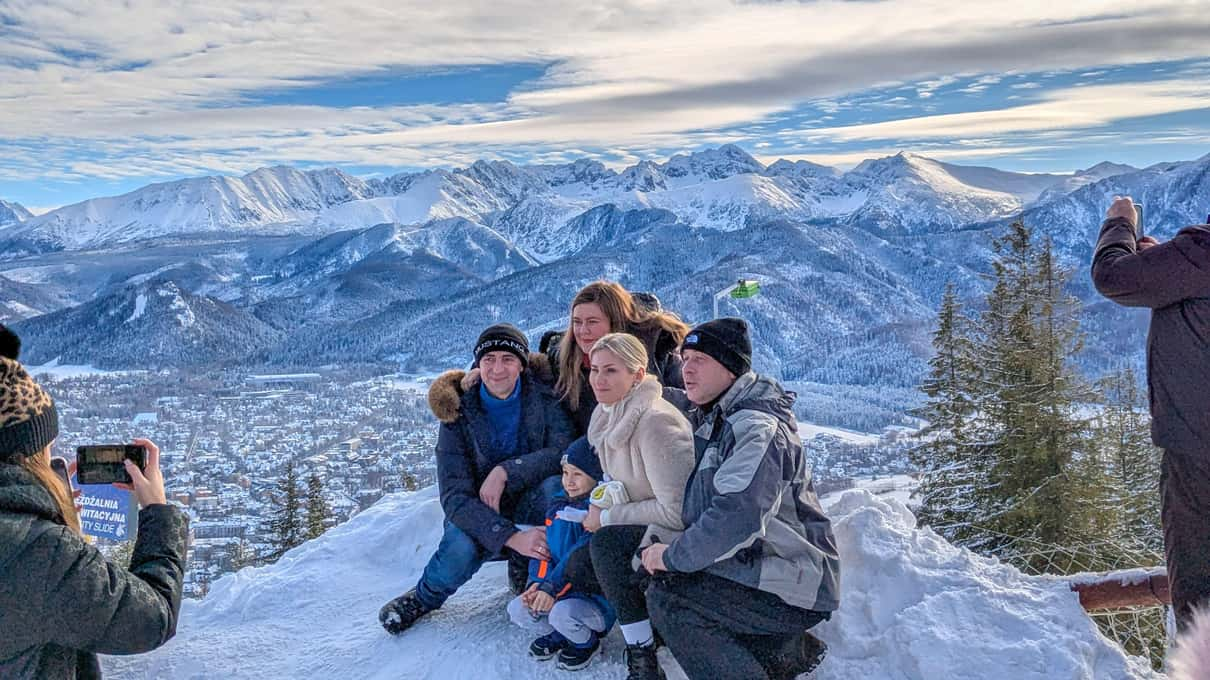
Spring is the hardest stretch to judge. Around 4 °C (39 °F) in March can mean deep snow or bare grass, so book a ride then only if a quad would please you as much.
June to September, when the light lasts
In June the day has about 16.5 hours of light, so a tour that leaves at 8:00 am can be back in Krakow before sunset. Highs near 17 °C (63 °F) make the terraces on Gubałówka comfortable without three layers.
Summer is also the gentlest time for Morskie Oko, since the paved road is long at 16 km (10 miles) return. Legendary Krakow's day to the lake is another matter in winter, when past guests advise bringing or buying shoe spikes.
The hot pools stay on the program all year, though they lose some charm in August heat. September is our compromise for people who dislike both crowds and cold, with highs around 14 °C (57 °F).
A flexible day for almost any season
A tour with several indoor and outdoor stops copes best with odd weather. If clouds swallow the view from the funicular, you still get a cheese tasting and a long soak in warm water.
Good in sun, sleet or drizzle
Cracow Top Tours mixes Chochołów, a cheese hut, the funicular, town time and 3 hours at the baths. Read the option you choose, because the 7-hour one is a shorter day.
It holds 4.8 from 5,800+ reviews on GetYourGuide and starts at ~$31. Pickup falls between 8:00 and 9:00 am, and the exact minute reaches you the day before, as our pickup guide sets out.
When we would skip it
Three situations make us hesitate. None of them ruins a trip on its own, but each takes something you paid for, so change the date if your stay in Krakow allows it.
- A winter Saturday or public holiday, when the 110 km (68 miles) to Zakopane can take far longer than the usual 1.5–2 hours
- A November date during funicular maintenance, since tours then drive you up the hill instead
- Thick fog in the forecast if the peaks are your main reason to go, above all on a day without baths
Fog hurts the Poland is beautiful day from ~$24 more than most, because an hour on Gubałówka is its high point and there are no pools to fall back on. In clear weather that same hour is the longest hilltop stop any of our six listings states.
Use the free cancellation as a weather tool
All six day trips to the Tatras on this site refund you in full if you cancel up to 24 hours before they start. On GetYourGuide you can even reserve now and pay later, which makes an early booking cheap insurance.
Book a midweek date near the beginning of your stay, then check a mountain forecast two evenings ahead. If it looks hopeless, cancel in time, then rebook for another morning.
Low cloud deserves special attention. It can hide every peak while the streets below stay dry, and an ordinary weather app will show you the same gray icon either way.
Remember that a forecast for Krakow says little about Zakopane. The town lies at the foot of the highest range in the Carpathians, and it can be snowing there while the city is dry.
Matching the month to the tour
Once the date is fixed, the choice gets shorter. This is how we would pair them, and you can compare the six Tatra tours in one table before you book.
- Deep winter and a taste for speed point to one of the two snowmobile days, with 400 PLN per vehicle on top
- Cold, grey weeks suit a bath day, and our page on Chochołów or Terma Bania helps you pick the pools
- High summer suits the lake, so read about walking to Morskie Oko first
- Shoulder months suit a short sightseeing day with two hours in Zakopane
Whatever the calendar says, pack for one season colder than Krakow. Our packing list of 12 things covers the damp towel, the cash for the snowmobile base, plus the small things people forget.